What to Expect from Your New Evergreen Heat Pump System
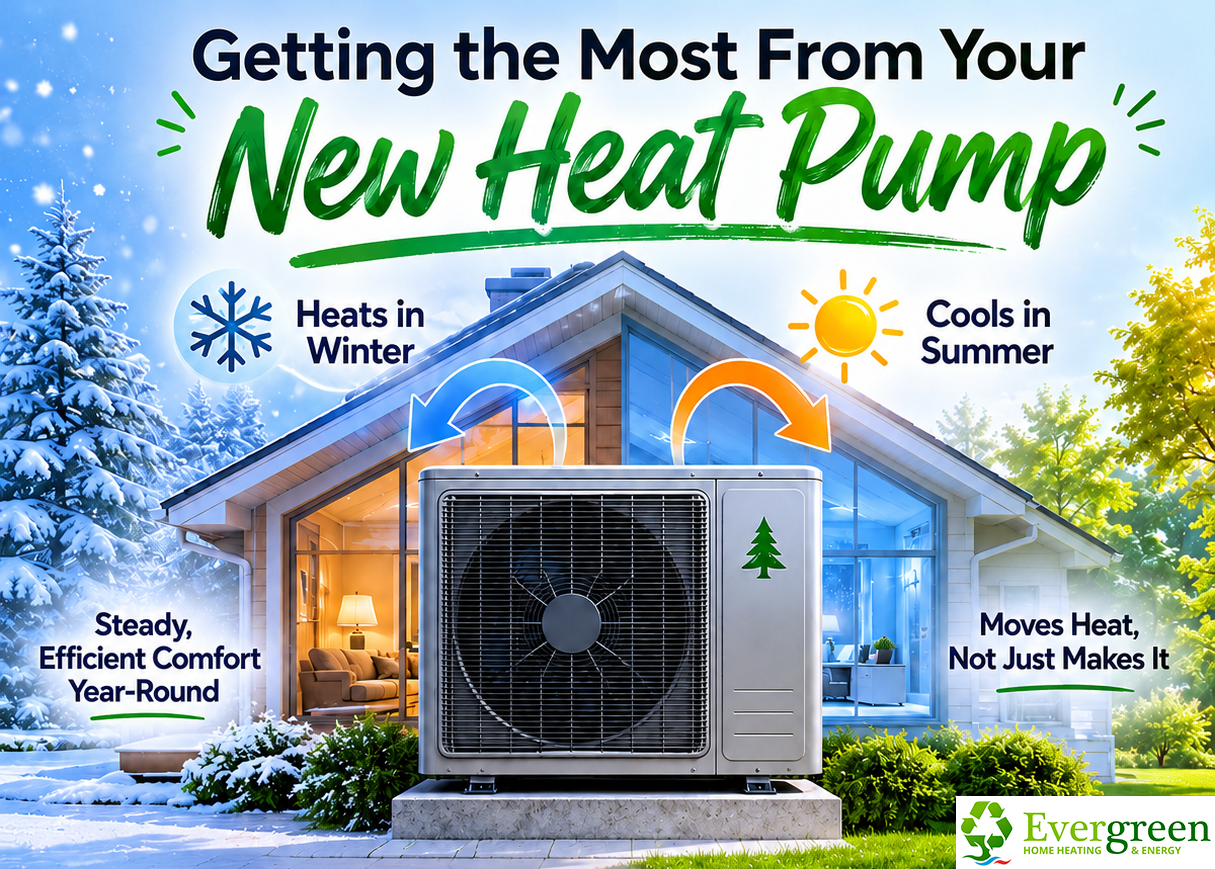
Your new heat pump is one of the most efficient ways to heat and cool your home. If this is your first time living with a heat pump system, some things may feel a little different compared to a traditional furnace or older air conditioner. That is completely normal.
At Evergreen, we design and install heat pump systems to provide steady, efficient comfort year-round. Understanding how your new system operates will help you get the best performance, comfort, and energy efficiency from it.
Your Heat Pump Heats and Cools Your Home
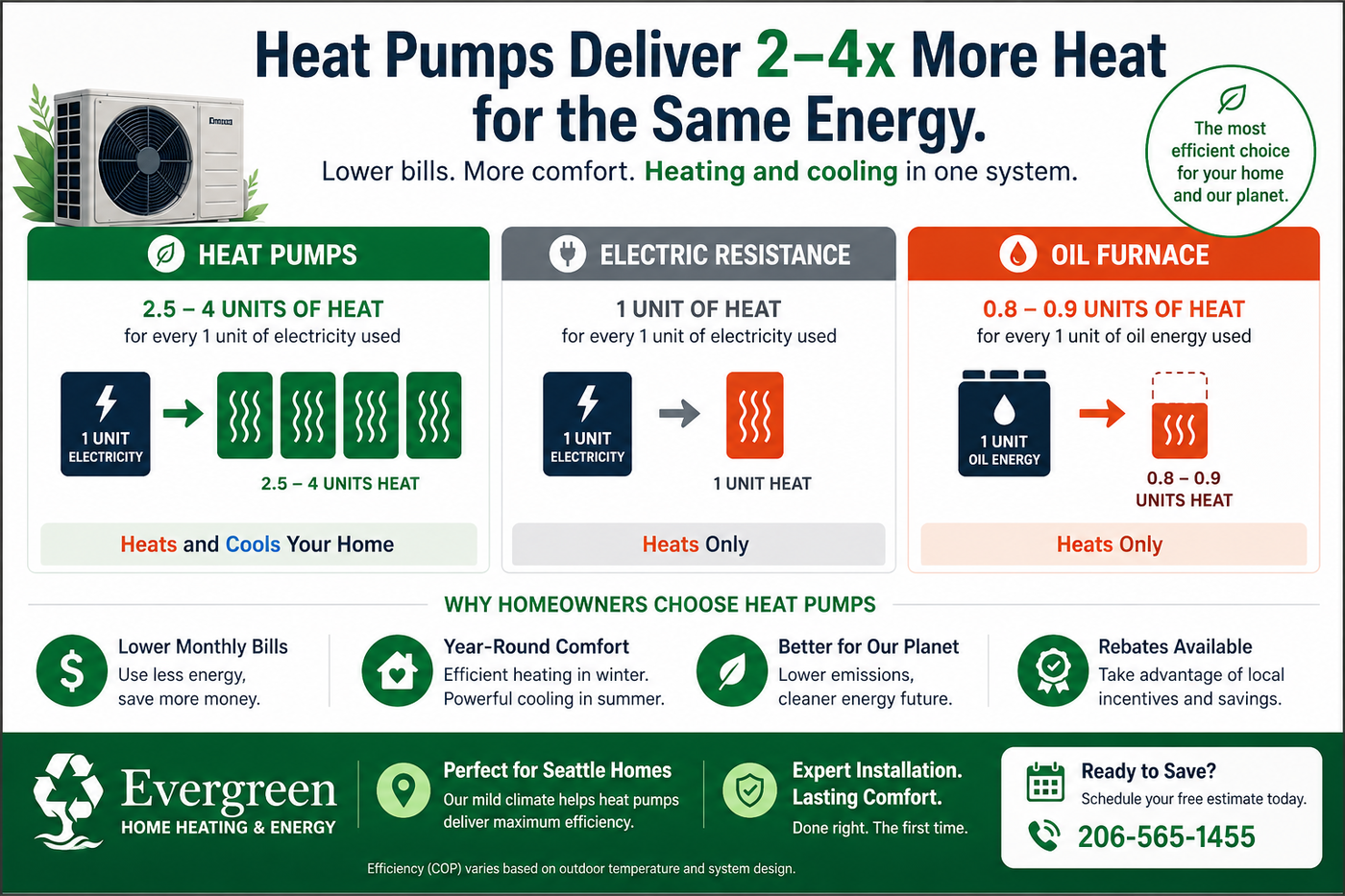
A heat pump works by moving heat rather than creating it from scratch.
In the summer, it works much like an air conditioner by moving heat out of your home. In the winter, it reverses the process and pulls heat from the outdoor air to bring warmth inside. Even when outdoor temperatures feel cold, there is still usable heat energy available for the system to capture.
Because of this, your new Evergreen heat pump system may operate more steadily and gently than the heating system you had before.
It May Run Longer Than You Expect
One of the most common questions homeowners have after a new installation is whether it is normal for the system to run longer than their previous furnace.
In most cases, the answer is yes.
Heat pumps are designed to maintain a more consistent indoor temperature by running at lower, steadier speeds. Instead of short bursts of very hot air, the system may operate more gradually for longer periods to maintain comfort efficiently.
This is often one of the reasons heat pumps feel more consistent from room to room.
The Air May Feel Warm, Not Hot
If you previously had a gas furnace, the air coming from the vents may feel cooler than you are used to.
A furnace typically delivers very hot air in short cycles. A heat pump usually delivers warm air over a longer period of time. Even if the air does not feel “hot” at the vent, the system is still heating your home effectively.
The most important thing to monitor is whether your home is maintaining the temperature you set on the thermostat.
Avoid Large Thermostat Changes
Your heat pump system will usually perform best when maintaining a steady temperature.
Large thermostat setbacks, such as turning the temperature way down overnight and raising it several degrees in the morning, can sometimes reduce efficiency and trigger backup heat unnecessarily.
For best results, we generally recommend choosing a comfortable temperature and making only small adjustments when needed.
Backup Heat Is Normal During Colder Weather
Depending on your system configuration, your heat pump may include backup heat, also called auxiliary or supplemental heat.
This backup heat helps maintain comfort during colder outdoor temperatures or during larger thermostat adjustments. Seeing “Aux Heat” on your thermostat occasionally is normal.
However, if backup heat is running constantly during mild weather, or your home is struggling to maintain temperature, please contact Evergreen so we can review the system operation.
Your Outdoor Unit May Frost or Steam
During heating season, it is normal for the outdoor unit to occasionally develop frost.
To clear this frost, the system will periodically enter a defrost cycle. During this process, you may notice steam rising from the outdoor unit, temporary sound changes, or slightly cooler air from the vents for a few minutes.
This is a normal part of heat pump operation and helps your system continue operating efficiently.
Keep the Outdoor Unit Clear
Your outdoor unit needs proper airflow to operate correctly.
Please keep leaves, snow, ice, plants, and debris away from the system. After storms or heavy snowfall, it is a good idea to visually check that the unit has open space around it.
Avoid covering the unit or blocking airflow, even during winter weather.
Replace or Clean Your Air Filter Regularly
Proper airflow inside the home is just as important as airflow outside.
A dirty filter can reduce comfort, increase energy usage, and place additional strain on the system. Depending on your filter type, pets, and household dust levels, filters may need to be replaced or cleaned every one to three months.
If you are unsure which filter your system uses, Evergreen can help.
Expect Quieter Operation
Many modern heat pump systems operate much more quietly than older HVAC equipment.
You may notice softer airflow sounds, quieter outdoor operation, or occasional sound changes as the system adjusts speeds or enters defrost mode. These changes are typically normal.
However, loud grinding, banging, buzzing, or repeated clicking noises should be evaluated.
Give the System Time to Settle In
After a new installation, it can take a little time to get familiar with how your home and system interact together.
Your thermostat settings, airflow, insulation levels, ductwork, and system sizing all work together as part of the overall comfort experience. Over the first several days and weeks, many homeowners become more accustomed to the system’s operating patterns.
If certain rooms remain uncomfortable or something does not seem right, please reach out to Evergreen so we can review the setup.
Know When to Contact Evergreen
It is normal for your heat pump to:
- Run steadily for longer periods
- Produce warm rather than hot air
- Occasionally enter defrost mode
- Use backup heat at times during colder weather
You should contact Evergreen if:
- The system blows cold air for an extended period during heating mode
- The home is not reaching the thermostat setting
- Ice completely covers the outdoor unit and does not clear
- Backup heat runs constantly during mild weather
- You hear loud or unusual noises
- Your energy bill suddenly increases without a clear reason
- The thermostat displays an error message
Addressing issues early can help protect both comfort and long-term system performance.
Final Thoughts
Your new Evergreen heat pump system is designed to provide reliable, efficient comfort throughout the year. While it may operate differently than your previous system, those differences are often part of what makes modern heat pumps more comfortable and energy efficient.
The most important things to remember are simple:
- Keep the thermostat relatively steady
- Maintain good airflow
- Replace or clean filters regularly
- Give the system time to do its job
With proper maintenance and the right expectations, your new system should provide efficient comfort for many years to come.