10 Heat Pump Troubleshooting Tips Every Evergreen Homeowner Should Know
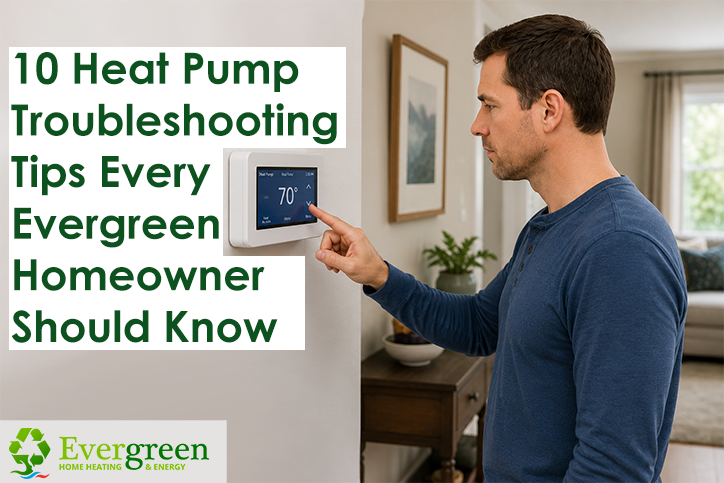
Your new Evergreen heat pump system is designed to provide efficient, reliable comfort year-round. If this is your first time living with a heat pump, some things may operate differently than your previous furnace or air conditioner, and that is completely normal.
Before scheduling service, there are a few simple things homeowners can check themselves. These quick troubleshooting steps can often resolve minor issues, help you better understand your system, and prevent unnecessary service calls.
1. Start With the Thermostat
If something does not seem right, the thermostat is the first place to check.
Make sure the system is set to the correct mode:
- “Heat” during colder weather
- “Cool” during warmer weather
If your home has a multi-zone heat pump system, we generally recommend avoiding “Auto” mode. Auto mode can sometimes cause different indoor units to compete between heating and cooling, which may reduce comfort or create unexpected system behavior.
Also verify the temperature setting. Heat pumps are designed to maintain comfort gradually and steadily, so large thermostat changes are usually unnecessary. Instead of raising the temperature several degrees at once, try smaller adjustments and give the system time to respond.
2. Check the Air Filter
A dirty air filter is one of the most common causes of airflow and comfort issues.
When the filter becomes clogged, airflow through the system is restricted. This can reduce efficiency, impact comfort, increase energy usage, and place extra strain on the equipment.
Most homeowners should check their filter every 1 to 3 months, depending on:
- Pets
- Dust levels
- Allergies
- How heavily the system is running
Keeping the filter clean helps your Evergreen heat pump system operate the way it was designed to.
3. Make Sure Vents Are Open and Unblocked
Your heat pump depends on steady airflow throughout the home.
Check that supply and return vents are open and not blocked by:
- Furniture
- Rugs
- Curtains
- Storage items
Blocked airflow can create uneven temperatures and make the system work harder than necessary.
Keeping interior doors open when possible can also help improve airflow and temperature balance throughout the home.
4. Inspect the Outdoor Unit
Your outdoor heat pump unit needs room for proper airflow.
Check around the unit and clear away:
- Leaves
- Branches
- Grass clippings
- Snow
- Ice
- Debris
During colder weather, it is normal to occasionally see frost on the outdoor unit. Your system is designed to automatically enter a defrost cycle to clear this frost. You may notice steam or temporary sound changes during this process, which is usually normal.
However, if the unit becomes heavily iced over, buried in snow, or starts making loud unusual noises, contact Evergreen for service.
5. Understand That Heat Pump Air Feels Different
One of the most common questions after a new installation is: “Why doesn’t the air feel as hot as my old furnace?”
In most cases, this is completely normal.
Traditional gas furnaces typically produce very hot air in short cycles. Heat pumps usually deliver warm air more consistently over longer periods of time.
Even if the air from the vents feels cooler than what you are used to, the system may still be heating your home very effectively.
The most important thing is whether your home is maintaining the desired temperature comfortably.
6. Give the System Time After Adjustments
Heat pumps are designed for steady, efficient temperature control rather than rapid temperature swings.
If you recently adjusted the thermostat, especially during extreme weather, give the system time to respond before assuming something is wrong.
Frequent thermostat adjustments can sometimes reduce efficiency and cause the system to run longer than necessary.
For most homes, a consistent thermostat setting provides the best comfort and performance.
7. Check Breakers and Power Switches
If the system is not turning on at all, check your electrical panel.
Look for any tripped breakers connected to the indoor or outdoor equipment. If a breaker has tripped, you can reset it once.
If it trips again, stop resetting it and contact a professional. Repeated breaker trips may indicate an electrical or equipment issue.
Some systems also have service disconnect switches near the equipment. Occasionally these can be accidentally turned off.
8. Know When Auxiliary Heat Is Normal
Many heat pump systems include auxiliary or backup heat.
It is normal to occasionally see “AUX Heat” during:
- Very cold weather
- Defrost cycles
- Large thermostat adjustments
This backup heat helps maintain comfort when the heat pump needs additional support.
However, if auxiliary heat runs constantly during mild weather, it may indicate a system or thermostat issue that should be checked.
9. Listen for Unusual Sounds
Modern heat pumps are generally very quiet, but some sounds are normal.
You may hear:
- Gentle humming
- Airflow sounds
- Clicking during startup or shutdown
- Temporary sounds during defrost mode
However, loud grinding, banging, screeching, rattling, or repeated clicking noises should be evaluated.
Addressing unusual sounds early can often prevent larger repairs later.
10. Know When to Contact Evergreen
Basic troubleshooting can solve many minor issues, but some situations should be checked by a professional.
Please contact Evergreen if:
- The system will not turn on after checking the thermostat and breakers
- The outdoor unit is heavily iced over
- The system blows cold air for an extended period during heating mode
- Rooms remain consistently uncomfortable
- You notice burning smells or electrical smells
- The breaker repeatedly trips
- Your energy bill suddenly increases without a clear reason
- Auxiliary heat runs constantly during mild weather
Our team can help verify that your system is operating correctly and address any issues before they become larger problems.
Final Thoughts
Your new Evergreen heat pump system is designed to provide efficient, dependable comfort throughout the year. While it may operate differently than your previous heating or cooling system, many of those differences are part of what makes modern heat pumps more efficient and consistent.
Starting with a few simple checks like thermostat settings, filters, airflow, and outdoor unit condition can often resolve small comfort concerns quickly.
And if something still does not seem right, Evergreen is here to help.