Best Practices for Using Your Heat Pump: What Every Homeowner Should Know
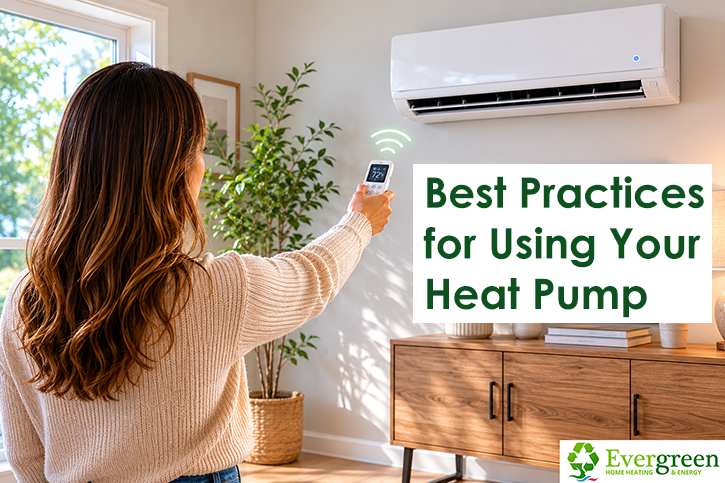
Congratulations on your new Evergreen heat pump system. Heat pumps are one of the most efficient ways to heat and cool a home, but they work differently than a traditional furnace or air conditioner. Whether you have a central heat pump, a ductless mini-split, or a multi-zone system, a few simple habits can help you stay comfortable, lower energy use, and get the best performance from your new equipment.
Set It and Let It Run
A heat pump is designed to maintain a steady indoor temperature. Unlike a gas furnace, which produces quick bursts of hot air, a heat pump typically runs longer and more gently. That is normal.
For best results, avoid large temperature swings throughout the day. If you prefer to adjust temperatures while sleeping or away from home, try to keep setbacks to about 4°F or less. Larger setbacks can cause the system to work harder during recovery and, on systems equipped with backup heat, may trigger auxiliary heat operation.
A good rule of thumb is to choose a comfortable temperature and make only modest adjustments when needed.
Understand Auxiliary Heat and Emergency Heat
Some heat pump systems include a backup heat source, often called Auxiliary Heat (AUX Heat). Auxiliary heat may come on automatically during very cold weather, during defrost cycles, or when recovering from a large thermostat adjustment. Occasional auxiliary heat operation is normal.
However, not all heat pumps have auxiliary heat. Many cold-climate and hyper-heat systems are designed to provide full heating capacity without backup heat under normal operating conditions.
Emergency Heat is different. It should generally only be used if instructed by an Evergreen professional or if the outdoor unit is not operating properly. Emergency Heat bypasses normal heat pump operation and can be significantly more expensive to run.
Choose the Right Fan Setting
Your thermostat may have Auto, On, or Circulate fan settings.
Auto runs the fan only when heating or cooling is active.
On runs the fan continuously, helping improve temperature consistency, air movement, filtration, and indoor air quality throughout the home.
Circulate provides a middle-ground option by periodically running the fan throughout the day. Because every Evergreen system uses an efficient blower motor, the operating cost difference is often smaller than many homeowners expect. The best setting depends on your comfort preferences, filtration goals, and indoor air quality needs. If you are unsure which setting is best for your home, contact Evergreen and we will be happy to help.
Change or Clean Your Air Filter Regularly
A clean filter helps protect both your equipment and your indoor air quality. A dirty filter can reduce airflow, lower comfort, increase energy use, and contribute to unnecessary wear on the system. Most homeowners should check their filter monthly and replace or clean it as needed. Homes with pets, allergies, asthma concerns, wildfire smoke exposure, remodeling projects, or heavy system usage may benefit from more frequent filter changes.
Restricted airflow can also contribute to frozen indoor coils, water leakage, and other avoidable issues. If your system includes an air purifier or air scrubber, regular fan operation can help maximize its effectiveness by moving more air through the treatment system.
Keep the Outdoor Unit Clear
Your outdoor heat pump needs room to breathe. Leaves, weeds, snow, ice, dirt, cottonwood, and other debris can restrict airflow and reduce performance. In the Pacific Northwest, cottonwood buildup is one of the most common seasonal issues we see.
Periodically inspect the outdoor coil and gently remove any buildup that may be restricting airflow. Never chip ice off the unit with sharp tools. If the system is iced over and does not clear itself through a normal defrost cycle, contact Evergreen.
Do Not Panic During Defrost Mode
During cold weather, your heat pump may occasionally enter defrost mode. Steam may rise from the outdoor unit, operating sounds may change, or indoor air may feel cooler for a short period.
This is normal. The system is removing frost from the outdoor coil so it can continue operating efficiently. If defrost cycles seem unusually frequent, last an unusually long time, or ice does not clear from the unit, contact Evergreen.
Keep Vents and Returns Open
Heat pumps are designed as balanced systems. Airflow is an important part of how the system was engineered and commissioned. Keep supply vents and return grilles open, clean, and unobstructed.
Blocking vents, closing too many registers, or restricting airflow can reduce efficiency, impact comfort, and in some cases contribute to frozen coils and shortened equipment life. If certain rooms are uncomfortable, contact Evergreen before making major airflow adjustments. We can help determine the root cause.
Use Multi-Zone Systems Correctly
If you have a multi-zone ductless system, keep all indoor units in the same operating mode whenever possible. Avoid using Auto mode unless specifically recommended for your equipment. During heating season, use Heat mode. During cooling season, use Cool mode. Keeping zones aligned helps the system operate more effectively and reduces comfort issues.
Keep Indoor Units Clean and Unobstructed
Avoid placing furniture, curtains, plants, or decorations directly in front of indoor ductless units. Clean filters regularly on every indoor unit, not just the most-used room. Good airflow helps each zone maintain comfort and operate efficiently.
Schedule Regular Professional Maintenance
Because heat pumps provide both heating and cooling, they work hard year-round. Regular maintenance helps ensure efficient operation, reliable comfort, and long equipment life.
An Evergreen technician can inspect airflow, refrigerant charge, electrical components, controls, coils, drains, and other key system components to catch small issues before they become larger repairs.
Know When to Call Evergreen
Contact Evergreen if:
• Your home is not reaching the desired temperature.
• Auxiliary heat appears to run constantly.
• Ice builds up and does not clear.
• Airflow feels weak.
• Energy usage suddenly increases.
• One zone is not heating or cooling properly.
• You see an error code on your thermostat or controller.
• You notice unusual sounds, leaks, or performance changes.
Final Thoughts
Your new heat pump was designed to provide efficient, comfortable heating and cooling for many years. The biggest things to remember are simple: avoid large temperature setbacks, keep airflow unrestricted, maintain clean filters, keep the outdoor unit clear, and schedule regular maintenance.
If you ever have questions about your system, contact Evergreen Home Heating and Energy or call us at 206-565-1455. We are here to help you get the most from your investment.