Heat Pumps vs. Electric & Oil Heat: What Seattle Homeowners Need to Know
If you’re heating your home in Seattle, you might be using more energy and spending more money than necessary.
A lot of homes across the area still rely on electric resistance systems like baseboard heaters or older oil furnaces. While these systems work, they’re not designed for efficiency, flexibility, or modern comfort.
Heat pumps offer a smarter approach.
Instead of creating heat, they move it and that one difference has a major impact on your energy use, monthly costs, and overall comfort.
How Each System Works (And Why It Matters)
Before comparing costs and efficiency, it helps to understand what each system is actually doing behind the scenes.
Heat Pumps: Moving Heat Instead of Creating It
Heat pumps transfer heat rather than generating it.
- In winter, they pull heat from the outdoor air and bring it inside
- In summer, they reverse and act like an air conditioner removing heat from your home
Even in Seattle’s cooler climate, there’s enough ambient heat for them to operate efficiently most of the year.
What this means for you:
- One system for both heating and cooling
- Lower energy use
- Consistent, comfortable indoor temperatures
Electric Resistance Systems: Simple, But Costly
Electric resistance systems create heat directly from electricity, similar to how a space heater or toaster works.
Common examples include:
- Baseboard heaters
- Wall heaters
- Electric furnaces
- Ceiling cable heating
The limitation:
- For every 1 unit of electricity used, you only get 1 unit of heat
- No cooling capability
- High energy consumption during colder months
Oil Furnaces: Fuel-Based Heating
Oil furnaces generate heat by burning fuel oil.
They can produce strong heat, but they come with trade offs:
- Typically 80–90% efficient
- No built-in cooling
- Fluctuating fuel costs
- More maintenance and higher emissions
Energy Use vs. Heat Output: See the Difference
The real difference between these systems comes down to how much heat you get for the energy you pay for.
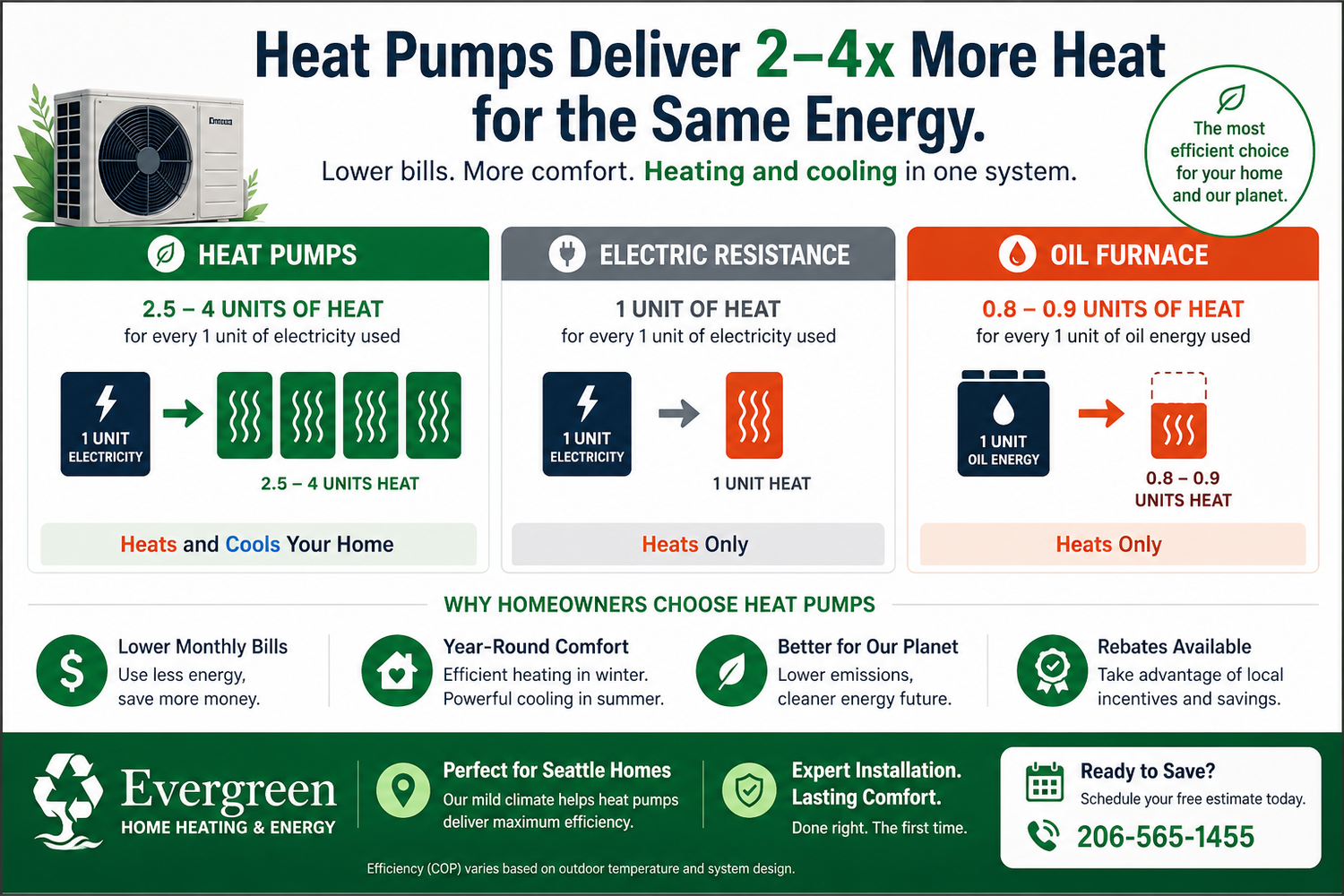
Take a look at the graphic above. It visually compares energy input vs. heat output so you can quickly see how each system performs.
Here’s what it shows:
- Heat Pumps:
Deliver 2.5 to 4 units of heat for every 1 unit of electricity - Electric Resistance Systems:
Deliver 1 unit of heat for every 1 unit of electricity - Oil Furnaces:
Deliver about 0.8 to 0.9 units of heat per unit of fuel
What This Means in Real Life
When you see it side-by-side, the difference becomes obvious:
- Heat pumps maximize the energy you pay for
- Electric systems break even at best
- Oil systems lose energy in the process
That gap directly impacts:
- Your monthly utility bills
- Your long-term energy costs
- How efficiently your home stays comfortable
And There’s One Key Advantage
The graphic also highlights something many homeowners overlook:
Heat pumps provide both heating and cooling.
That means:
- No need for a separate A/C system
- Lower total equipment costs over time
- Year-round comfort from a single solution
Why Heat Pumps Work Especially Well in Seattle
Seattle’s climate is one of the best-case scenarios for heat pump performance.
We don’t typically experience prolonged extreme cold, which allows heat pumps to operate at high efficiency for most of the year.
Lower Monthly Energy Bills
Because heat pumps move heat instead of generating it, they use significantly less energy.
That translates into:
- Reduced heating costs
- More predictable monthly bills
- Better long-term savings
Cooling Without the Extra System
Many Seattle homes don’t have central air conditioning.
With a heat pump:
- Cooling is already built in
- No need for window units or separate installations
- Better comfort during warmer months
More Consistent, Comfortable Heat
Heat pumps don’t blast hot air the way traditional systems do.
Instead, they provide:
- Steady, even temperatures
- Less dryness in the air
- Improved humidity control (especially helpful in Seattle’s damp climate)
Cleaner, More Efficient Energy Use
As Washington’s energy grid becomes cleaner, heat pumps become an even better investment.
- Reduced reliance on fossil fuels
- Lower carbon footprint
- More future-proof home energy system
Incentives That Reduce Upfront Cost
Many homeowners qualify for:
- Utility rebates
- Federal tax credits
- State and local incentives
These programs can significantly lower the cost of upgrading to a heat pump.
What This Means for Your Home
If you’re currently using:
- Baseboard heating
- An electric furnace
- Oil heat
You’re likely:
- Paying more than necessary for energy
- Missing out on built-in cooling
- Getting less consistent comfort
Upgrading to a heat pump can improve all three.
The Bottom Line
Traditional systems consume energy to create heat.
Heat pumps use a small amount of energy to move a larger amount of heat.
That’s why they:
- Lower your monthly bills
- Improve comfort year-round
- Deliver more value over time
One System. Better Comfort. Lower Costs.
In a climate like Seattle’s, heat pumps aren’t just an alternative, they’re often the smarter choice.
If you’re thinking about upgrading your home’s heating system, it’s not just about staying warm…
…it’s about doing it efficiently.