Two steps to a furnace repair in Seattle’s Central District
For this Central District homeowner, getting the heat back was the first priority. The initial visit found a blown low-voltage fuse. Replacing it let the furnace turn on and off again, but the same testing uncovered wear in the inducer motor. That left a second decision: address the worn part while the furnace was running, before it could cause another loss of heat.
An immediate fix and a separate recommendation
During the diagnostic visit, our technician replaced the fuse and adjusted thermostat settings at the homeowner’s request. The furnace then responded during testing.
The inducer motor was a separate concern from the fuse. Our technician noted signs of wear and recommended replacement before the component could leave the home without heat. The homeowner approved the work, and we arranged a return visit with the replacement part. The aim was to reduce the chance of another interruption, rather than wait for the motor to fail.
Returning with the replacement motor
On the repair visit, we installed the new inducer motor assembly and ran the furnace through an on-and-off sequence. The technician’s completion notes record normal heating operation and no further concerns found during those tests.
The record also called for checking operation again around the following year. That kept the focus on how the equipment was operating over time, as well as the work completed that day.
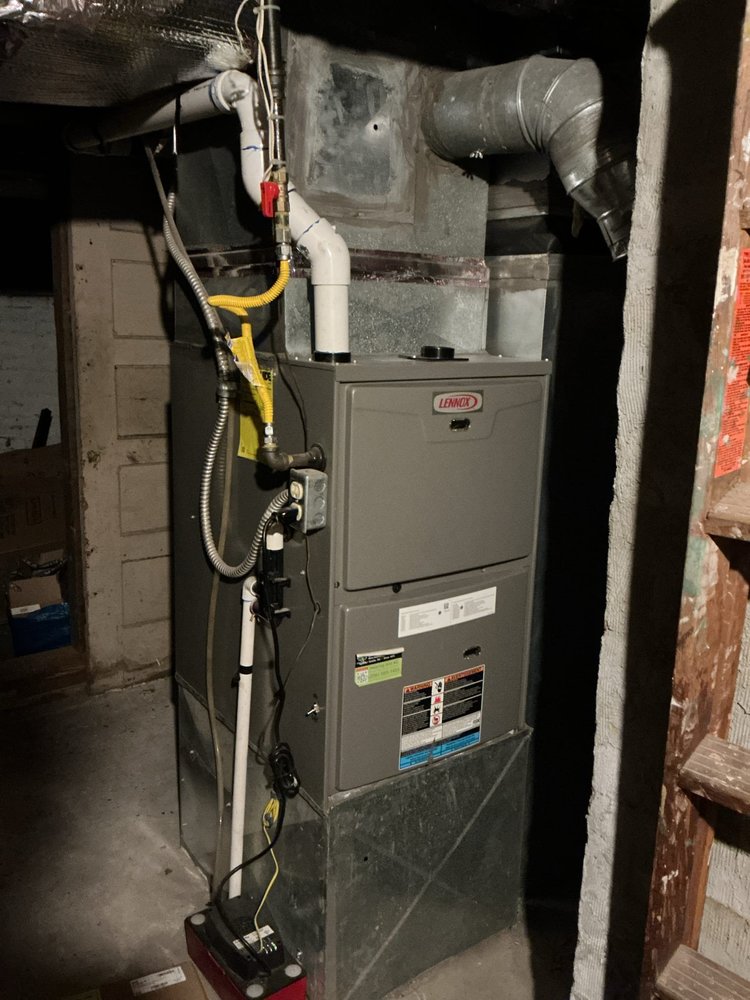
These two visits gave the homeowner a practical sequence: restore heating first, then address the worn component found along the way. The preventive repair was intended to reduce the chance of another interruption and an unexpected repair decision later. The photo shows the furnace that received the service.
Need help with your system?
Tell us what your heating or cooling system is doing, when the problem began and any messages on the thermostat.