How a Heat Pump Conditions Your Air and Why It’s Perfect for Seattle Homes
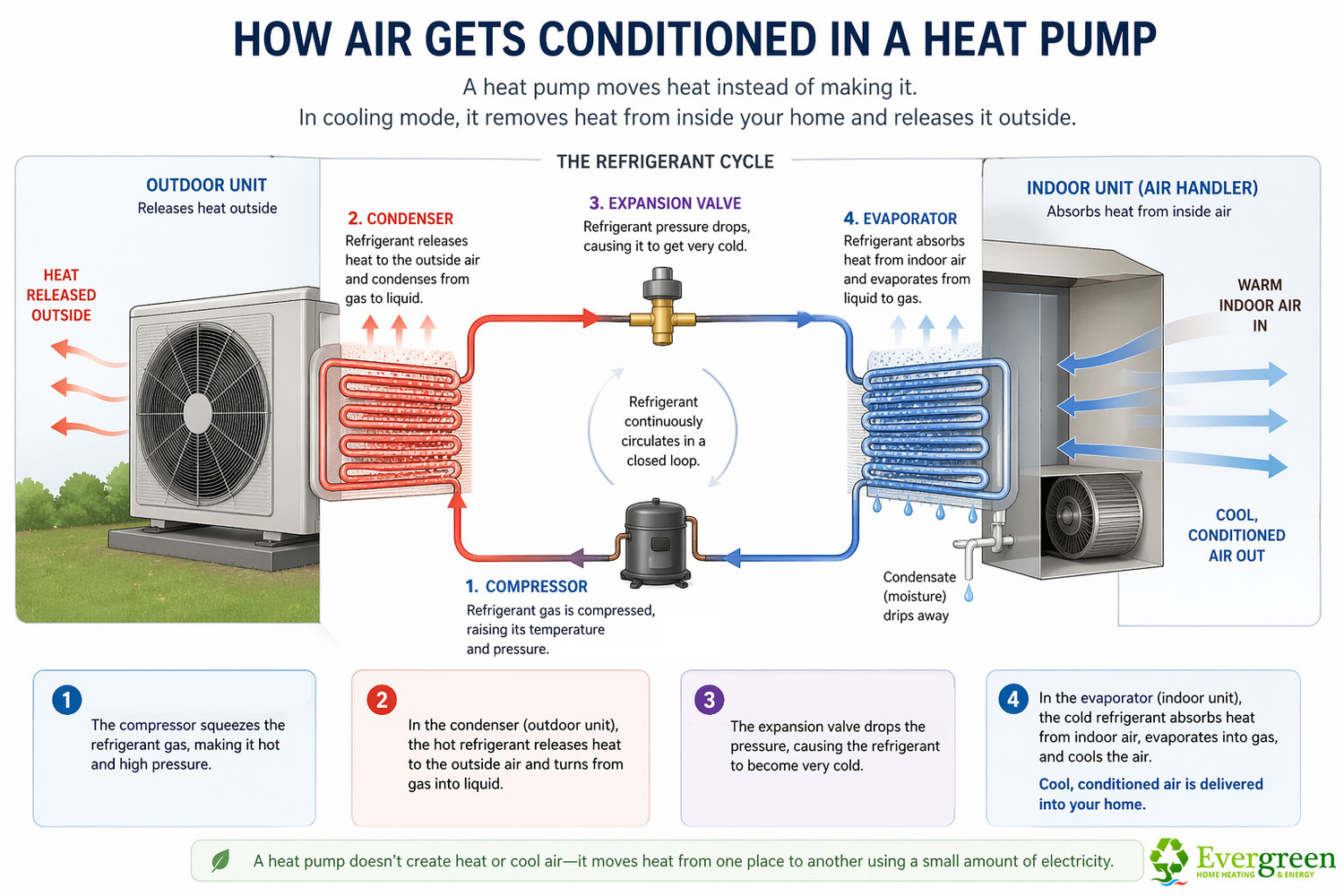
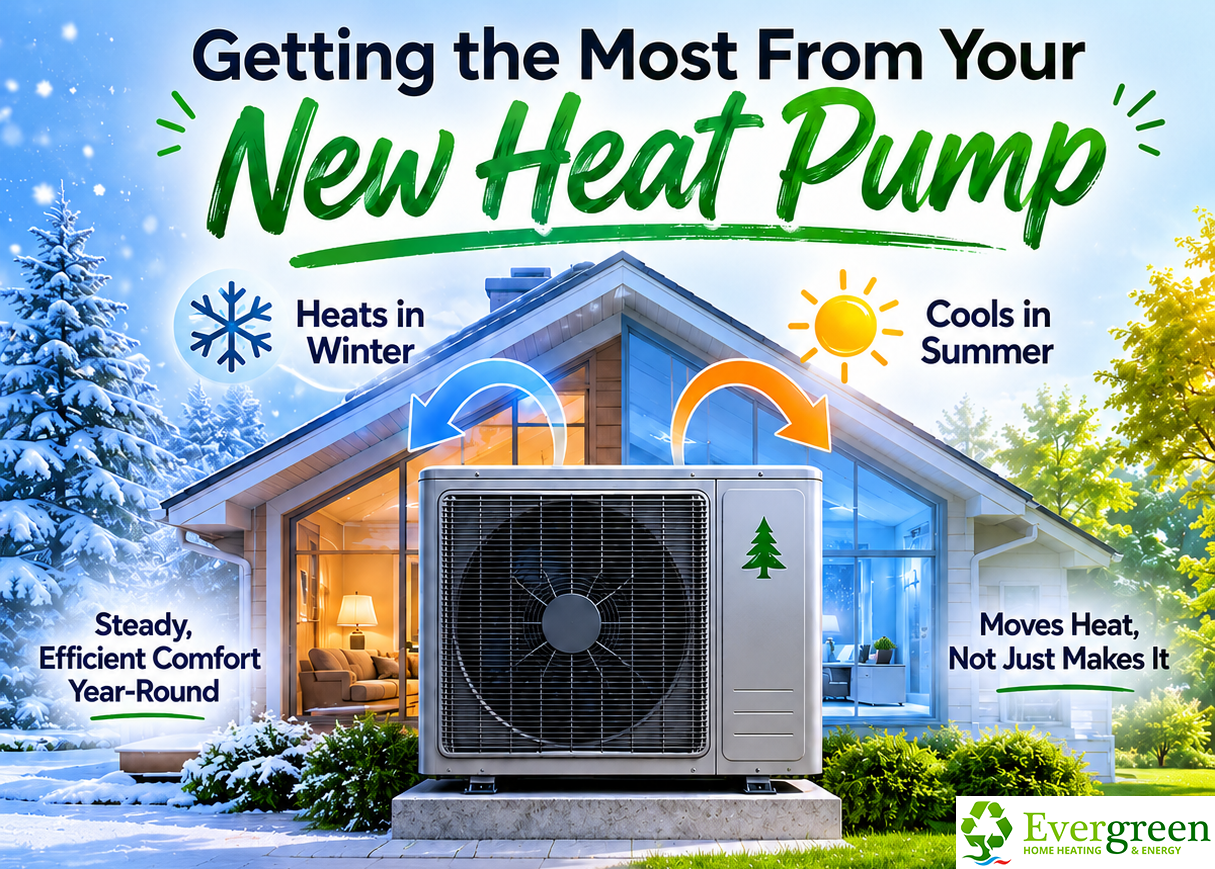
If you’ve ever wondered how a heat pump keeps your home comfortable year-round, the answer is surprisingly simple: it doesn’t create heat, it moves it.
But just as important as the heat pump itself is how the air moves through your home either through ductwork or ductless mini split systems.
The diagram above shows the core process. Let’s break it down.
How Air Gets Conditioned in a Heat Pump
At the core of a heat pump is a continuous refrigerant cycle but comfort starts with the air inside your home.
1. Return Air: Pulling Air from Your Home (Ducted Systems)
In homes with ductwork, the system begins by pulling in return air.
- Return vents draw air back to the indoor unit (air handler)
- This air carries heat and humidity from your living space
- It’s the starting point for conditioning
Without proper return airflow, your system can’t operate efficiently.
2. Heat Transfer at the Indoor Unit
Whether you have a ducted system or a mini split, this step is where the conditioning happens.
- In cooling mode: heat is removed from the air
- In heating mode: heat is added to the air
- Moisture is reduced during cooling
The difference is how the air gets there and where it goes next.
3. Supply Air vs. Ductless Delivery
Ducted Systems (Traditional Heat Pumps)
After conditioning, air is pushed through supply ducts:
- Delivered through vents in each room
- Designed to evenly distribute comfort
- Works best when ductwork is properly sized and balanced
This creates a continuous loop:
1. Return air pulled in
2. Air conditioned
3. Supply air delivered back into the home
Ductless Mini Splits (No Ductwork Required)
Mini splits skip ductwork entirely.
- Each indoor unit pulls in air directly from the room
- Conditions it using the same heat pump technology
- Blows it right back into the space
This means:
- No return ducts
- No supply ducts
- Room-by-room temperature control (zoning)
4. The Refrigerant Cycle (What Powers Both Systems)
Behind the scenes, both ducted heat pumps and mini splits use the same process:
- Refrigerant absorbs heat indoors
- The compressor increases pressure and temperature
- Heat is released outside (or absorbed, in heating mode)
- The cycle repeats
Why This Matters for Your Home
The biggest difference between systems isn’t the technology, it’s how comfort is delivered.
Ducted Heat Pumps Are Great For:
- Homes with existing ductwork
- Whole-home, centralized comfort
- Even temperature distribution
Mini Splits Are Great For:
- Homes without ducts
- Additions, remodels, or older Seattle homes
- Targeted comfort in specific rooms
- Energy savings through zoning
Why Heat Pumps Work So Well in Seattle
Seattle’s climate is one of the best possible environments for heat pumps. Whether ducted or ductless.
Mild Winters = High Efficiency
- Heat pumps don’t have to work as hard
- They stay efficient even in cooler temperatures
- You get more heat for less energy
Cooling for Warmer Summers
Many Seattle homes weren’t built with AC but summers are changing.
Heat pumps (especially mini splits) make it easy to add cooling:
- No ductwork required
- Fast installation
- Quiet, efficient operation
The Real Benefits for Seattle Homeowners
Lower Energy Costs
Heat pumps can deliver 2–4x more energy than they use, lowering utility bills.
Flexible Installation Options
- Use existing ducts
- Or go ductless with mini splits
- Customize based on your home
More Comfortable Homes
- Steady, even temperatures (ducted)
- Or room-by-room control (ductless)
Environmentally Friendly
- Lower carbon footprint
- Works well with clean electricity
- Reduces reliance on fossil fuels
Rebates & Incentives
Seattle-area homeowners often qualify for strong local and state incentives.
The Bottom Line
A heat pump doesn’t just heat or cool your home, it moves heat efficiently and delivers comfort in the way that fits your home best.
- With ductwork → full-home airflow using return and supply air
- Without ductwork → targeted comfort using ductless mini splits
In Seattle’s mild climate, both options offer:
- Lower energy bills
- Year-round comfort
- A future-proof HVAC solution
Ready to Upgrade Your Home Comfort?
If you’re considering a heat pump whether ducted or ductless, the key is getting the system designed correctly for your home.
At Evergreen Home Heating and Energy, we specialize in helping Seattle homeowners choose the right solution, optimize airflow, and take full advantage of available rebates.
Schedule a consultation today and find out what a properly designed heat pump system can do for your home.